





The Short Answer:
Construction workers can suffer many types of injuries, but the most common construction injuries include sprains and strains, broken and fractured bones, brain injuries, spinal cord injuries, burns and electrical injuries, cuts, and crush or amputation injuries. These injuries often happen because of falls, falling objects, heavy machinery, exposed wiring, unsafe work areas, repetitive motion, or overexertion.
If you were injured on a construction site in Massachusetts, you may be able to pursue workers’ compensation benefits or, in some cases, a third-party injury claim. Jim Glaser Law can review what happened and explain your legal options during a free case review.
Key Takeaways
- Falls are one of the most dangerous construction accident types and can cause broken bones, brain injuries, spinal cord injuries, and other serious harm.
- Overexertion and repetitive motion injuries are common non-fatal construction injuries, especially among workers who lift, carry, bend, push, pull, or use vibrating tools.
- OSHA’s “Fatal Four” construction hazards are falls, struck-by-object accidents, electrocutions, and caught-in/between accidents.
- Construction injury claims may involve workers’ compensation, a third-party injury claim, or both, depending on how the accident happened.
- After a construction injury, workers should report the injury, get medical treatment, preserve evidence, and speak with a lawyer if benefits are delayed, denied, or disputed.
Table of Contents
- What Are the Most Common Construction Injuries?
- 7 Common Construction Injuries
- OSHA’s Fatal Four Construction Hazards
- What Should You Do After a Construction Injury?
- Can You Get Workers’ Compensation for a Construction Injury?
- When Should You Contact a Construction Injury Lawyer?
- FAQs: Common Construction Injuries
- Contact Jim Glaser Law After a Construction Injury in Massachusetts
What Are the Most Common Construction Injuries?
The most common construction injuries include soft tissue injuries, broken bones, head and brain injuries, spinal cord injuries, burns, cuts, amputations, and overexertion injuries. Some injuries happen suddenly, such as after a fall from scaffolding, a struck-by-object accident, or a machinery accident. Others develop over time from repeated lifting, carrying, bending, pushing, pulling, or using vibrating tools.
Injuries from construction accidents can affect a worker’s ability to return to the job, complete everyday tasks, and support their family. Depending on how the injury happened, an injured worker may be able to pursue workers’ compensation benefits, a third-party injury claim, or both. Jim Glaser Law can review the details of your accident and explain what options may apply during a free case review.
7 Common Construction Injuries
Construction sites are busy, physically demanding places where workers may be exposed to heavy equipment, falling materials, elevated work areas, electrical hazards, sharp tools, and repetitive labor. While every accident is different, many construction injury claims involve one or more of the following injuries:
1. Sprains, Strains, & Soft Tissue Injuries
Sprains, strains, and soft tissue injuries are among the most common non-fatal construction injuries because workers often lift heavy materials, repeat the same motions, work in awkward positions, or push through long shifts.
These injuries can affect the muscles, tendons, and ligaments in the back, shoulders, knees, neck, arms, and legs. A worker may suffer a back strain while carrying lumber, a shoulder injury from overhead work, a knee injury from repeated bending, or a muscle tear while pushing, pulling, or lifting heavy equipment.
Repetitive motion can also lead to construction work injuries over time. Workers who use vibrating tools, carry heavy materials, climb ladders, or perform the same movement throughout the day may develop pain, weakness, stiffness, or limited range of motion. Even when these injuries don’t appear dramatic at first, they can make it difficult to work, drive, sleep, or complete normal daily tasks.
2. Broken Bones & Fractures
Broken bones and fractures are common construction injuries, especially after serious falls, struck-by object accidents, and equipment-related incidents. Construction workers may suffer fractures in the arms, wrists, ankles, legs, ribs, hips, hands, feet, or face.
Falls from ladders, scaffolds, roofs, stairs, or uneven surfaces can cause serious fractures. A worker may also break a bone after being hit by falling tools, swinging materials, dropped loads, or moving equipment. In some cases, a fracture may require surgery, pins, plates, screws, a cast, physical therapy, and time away from work.
Even a “simple” fracture can create major problems for someone who depends on physical labor to earn a living. A broken wrist, ankle, or leg may prevent a worker from climbing, lifting, carrying, driving, or safely returning to a job site.
3. Traumatic Brain Injuries
Traumatic brain injuries can happen when a worker’s head is struck, shaken, or violently impacted during a construction accident. These injuries may include concussions, skull fractures, brain bleeding, and other forms of head trauma.
Construction workers may suffer brain injuries after falling from a height, being hit by falling tools or materials, getting struck by a vehicle or piece of equipment, or working in an area without proper head protection. Some symptoms appear right away, while others may develop hours or days later.
Possible signs of a traumatic brain injury include headaches, dizziness, nausea, confusion, memory problems, blurred vision, mood changes, trouble concentrating, and sensitivity to light or sound. More serious brain injuries may cause seizures, loss of consciousness, cognitive changes, or long-term limitations that affect a worker’s ability to return to the job.
4. Spinal Cord, Neck, & Back Injuries
Spinal cord, neck, and back injuries are some of the most serious construction injuries because they can affect mobility, strength, sensation, and long-term quality of life. These injuries may happen suddenly in a fall or machinery accident, or they may develop over time from heavy lifting and repeated strain.
Common examples include herniated discs, pinched nerves, lower back injuries, chronic neck pain, nerve damage, and spinal cord trauma. In the most severe cases, a construction accident may lead to partial or complete paralysis.
A worker may suffer a spinal injury after falling from scaffolding, being pinned by equipment, lifting heavy materials, or being struck by falling objects. Back and neck injuries can also be difficult to prove because insurance companies may argue they were caused by age, prior injuries, or something outside of work. Medical evidence, work restrictions, and accident reports can be important in these claims.
5. Burns, Electrocutions, & Electrical Injuries
Burns, electrocutions, and electrical injuries can occur when construction workers are exposed to power lines, defective tools, exposed wiring, fires, explosions, chemicals, or hot surfaces. Electrical accidents are especially dangerous because they can harm the skin, nerves, muscles, heart, and internal organs.
Construction workers may suffer thermal burns from fires or explosions, chemical burns from hazardous substances, or electrical burns from live wires and faulty equipment. Electrical injuries can also cause cardiac problems, nerve damage, loss of consciousness, and injuries from being thrown or falling after contact with electricity.
These injuries may require emergency care, hospitalization, skin grafts, surgery, and long-term treatment. Scarring, chronic pain, reduced mobility, and emotional trauma may also affect a worker after a serious burn or electrical accident.
6. Cuts, Lacerations, & Puncture Wounds
Cuts, lacerations, and puncture wounds are common on construction sites because workers often handle sharp tools, exposed nails, glass, metal, power tools, debris, and unfinished materials. While some cuts are minor, others can cause deep tissue damage, infection, scarring, or loss of function.
A worker may suffer a serious laceration from a saw, grinder, utility knife, broken glass, sheet metal, or improperly guarded machinery. Puncture wounds may happen when a worker steps on exposed nails, sharp debris, or other hazardous materials.
More serious cuts can damage tendons, nerves, muscles, or blood vessels. Depending on the location and severity of the wound, a worker may need stitches, surgery, antibiotics, physical therapy, or time away from work.
7. Crush Injuries & Amputations
Crush injuries and amputations are among the most severe construction work injuries. These injuries often happen when a worker is caught in or between machinery, pinned by equipment, trapped in a trench collapse, struck by collapsed materials, or injured by forklifts, cranes, loaders, trucks, or other heavy equipment.
A crush injury can damage bones, muscles, nerves, blood vessels, and internal organs. In some cases, the damage is so severe that a limb, finger, toe, hand, foot, arm, or leg can’t be saved. Amputations may also happen instantly during machinery accidents involving blades, rollers, presses, or unguarded equipment.
These injuries can permanently change a worker’s life. Recovery may involve emergency surgery, prosthetics, rehabilitation, home modifications, and long-term medical care. A worker may also be unable to return to the same type of construction job after a serious crush injury or amputation.
OSHA’s Fatal Four Construction Hazards
OSHA’s “Fatal Four” refers to 4 of the most dangerous hazards in the construction industry: falls, struck-by-object accidents, electrocutions, and caught-in/between accidents. These hazards are especially serious because they are linked to many severe and fatal construction accidents.
The Fatal Four include:
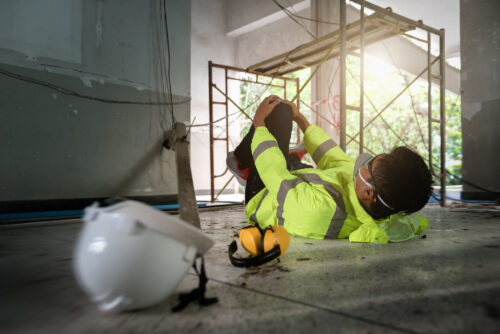
- Falls: Falls can happen when workers are on ladders, scaffolding, roofs, floor openings, stairs, or unprotected edges. These accidents may cause broken bones, traumatic brain injuries, spinal cord injuries, back injuries, and internal injuries.
- Struck-by object accidents: These accidents happen when workers are hit by falling tools, swinging materials, dropped loads, moving vehicles, or heavy equipment. A struck-by accident can lead to concussions, fractures, eye injuries, crush injuries, and other serious harm.
- Electrocutions: Electrical accidents may involve overhead power lines, exposed wiring, defective tools, faulty equipment, or missing safety procedures. Electrocutions and electrical injuries can cause burns, cardiac injuries, nerve damage, falls, and life-threatening trauma.
- Caught-in/between accidents: These accidents happen when a worker is trapped, crushed, compressed, or pinned between objects. Examples include trench collapses, machinery accidents, workers caught in unguarded equipment, or workers pinned between vehicles, structures, or heavy materials.
While OSHA’s Fatal Four focuses on some of the deadliest construction hazards, workers can also suffer serious non-fatal injuries from overexertion, repetitive motion, slip and falls, unsafe tools, and other job site risks. If you were injured because of one of these hazards, you may be able to pursue workers’ compensation benefits, a third-party injury claim, or both, depending on what happened.
What Should You Do After a Construction Injury?
What you do after a construction injury can affect your health, your ability to work, and any claim you may need to pursue. After an accident, try to take these steps as soon as you can:
- Report the injury to your employer. Tell your supervisor, foreman, or employer what happened as soon as possible. Even if the injury seems minor, reporting it early can help create a record of the accident.
- Get medical care. See a doctor, visit urgent care, or go to the emergency room if needed. Some injuries, including concussions, back injuries, and soft tissue injuries, may get worse after the initial accident.
- Take photos of the accident scene and your injuries. Photos of the work area, equipment, debris, ladder, scaffolding, floor opening, or other hazards may become important evidence later.
- Get witness information. If coworkers, contractors, or others saw what happened, ask for their names and contact information. Witnesses may be able to help explain how the accident occurred.
- Keep evidence related to your injury. Save medical records, work restrictions, accident reports, emails, text messages, photos, and anything else connected to the accident or your recovery.
- Be careful with recorded statements. Before giving a recorded statement to an insurance company, make sure you understand your rights and how your statement could be used.
- Contact a Massachusetts construction injury lawyer if problems come up. You may want legal guidance if your claim is delayed, denied, disputed, or involves a serious injury. A lawyer can review what happened and explain whether you may have a workers’ compensation claim, a third-party injury claim, or both.
If you were hurt on a construction site in Massachusetts, Jim Glaser Law can review your situation and explain your options during a free case review.
Can You Get Workers’ Compensation for a Construction Injury?
In many cases, yes. If you were hurt while doing your job on a construction site, you may be able to pursue workers’ compensation benefits. Workers’ compensation can help pay for medical care and partial lost wages after a work-related injury.
You generally don’t have to prove that your employer caused the accident to receive workers’ compensation. Instead, the key question is usually whether your injury happened in the course of your work.
The insurance company may dispute whether your injury is work-related, whether you need certain medical treatment, whether you can return to work, or how much you should receive in wage replacement benefits. Having a lawyer on your side can help you get the maximum compensation you may be owed.
When Should You Contact a Construction Injury Lawyer?
You may want to contact a construction injury lawyer if your injury, benefits, or legal options are unclear. This is especially true when the accident affects your ability to work or when the insurance company disputes your claim.
Consider speaking with a lawyer if:
- Your injury is serious or may keep you out of work. Broken bones, brain injuries, spinal cord injuries, burns, crush injuries, amputations, and severe back or neck injuries can lead to long recovery periods, medical bills, and lost income.
- Your workers’ comp claim was denied or delayed. A delay or denial can make it harder to get medical care and wage replacement benefits when you need them most.
- The insurance company says your injury is not work-related. Insurers may argue that your injury happened outside of work, was caused by a preexisting condition, or is not as serious as your doctor says.
- A third party may have caused the accident. If a subcontractor, property owner, equipment manufacturer, driver, or another company contributed to the accident, you may have a separate third-party injury claim.
- You’re not sure what benefits or compensation may be available. Construction injury cases can involve workers’ compensation, third-party claims, or both. A lawyer can review what happened and explain which options may apply.
Jim Glaser Law offers free case reviews for injured construction workers in Massachusetts. There is no obligation to speak with our team.
FAQs: Common Construction Injuries
Sprains, strains, soreness, and overexertion-related injuries are among the most common non-fatal construction injuries. These injuries often happen when workers lift heavy materials, repeat the same motions, carry equipment, bend throughout the day, or work long shifts.
You may be able to pursue workers’ compensation for a repetitive stress injury if your condition is connected to your work duties. These claims can involve disputes over whether the injury was caused by work, so medical evidence is important.
You may want to speak with a lawyer if your injury is serious, your claim is denied, your benefits are delayed, your employer or insurer disputes what happened, or a third party may have contributed to the accident.
Contact Jim Glaser Law After a Construction Injury in Massachusetts
If you were injured on a construction site in Massachusetts, you may have questions about your medical care, missed work, and what benefits or compensation may be available. Jim Glaser Law can review what happened, explain your options, and help you understand whether you may have a workers’ compensation claim, a third-party injury claim, or both.
Construction injury cases can become complicated when an insurance company delays benefits, disputes whether the injury is work-related, or when more than one company was involved on the job site. You don’t have to sort through those questions alone.
Contact Jim Glaser Law today for a free case review. There is no obligation to speak with our team.